Babenda: The taste of shared memories in Ouagadougou
By Farida TIEMTORE, AfriFOODlinks Youth Ambassador, Burkina Faso
In Ouagadougou, babenda is not just cooked — it is lived. Between leaves, cracked rice and ground peanuts, a family transforms a simple meal into a moment of sharing, laughter and connection.
Babenda is much more than just a dish: it is a hearty mix of local leaves, broken rice and ground peanuts. It is both simple and nourishing and perfectly embodies Burkinabe cuisine: a cuisine of sharing, ingenuity and heart.
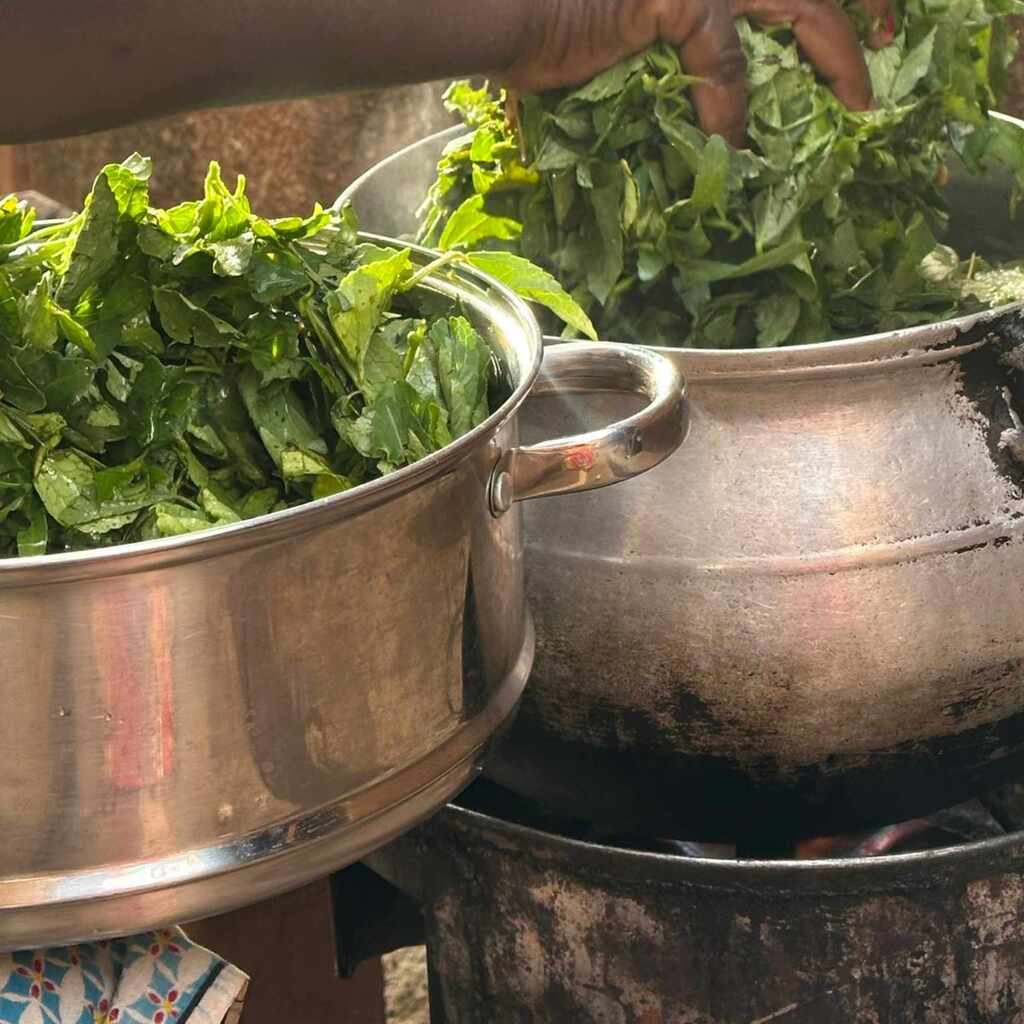
Every dish is unique, because everyone puts into it what they have and, above all, who they are. That morning, the Ouagadougou sun streamed gently through the shutters of our kitchen. A golden light bathed the room and already, a fresh scent of leaves and earth hung in the air. My mother, my cousins and I gathered around the basins. “Be careful with the borombourou (amaranth leaves) — it’s bitter!” said my mother, handing us the leaves. “I’ll take care of the bito (sorrel leaves)!” replied my cousin enthusiastically. We laughed. Making babenda requires care, but it is always a joyful moment.
We began by sorting, washing and chopping the leaves. In our bowl we had borombourou (amaranth), bito (sorrel) and kennedbo (cleome leaves, with a slightly spicy flavour). The colours blended, the textures varied and together they already formed something alive.
Each leaf had its own character: some bitter, others tangy. Together, they created harmony. My mother explained that some people add other ingredients to enrich the dish: moringa (highly nutritious leaves), sweet potato leaves, peanut paste for extra creaminess, potash, soumbala (fermented néré seeds, with a strong flavour) or dried fish for a deeper taste. Then she added: “All of that is optional. Babenda can be very good even with very little.” And on that day, we kept the essentials: the leaves, the cracked rice and the ground peanuts, which gave the dish a gentle sweetness and a pleasant texture.
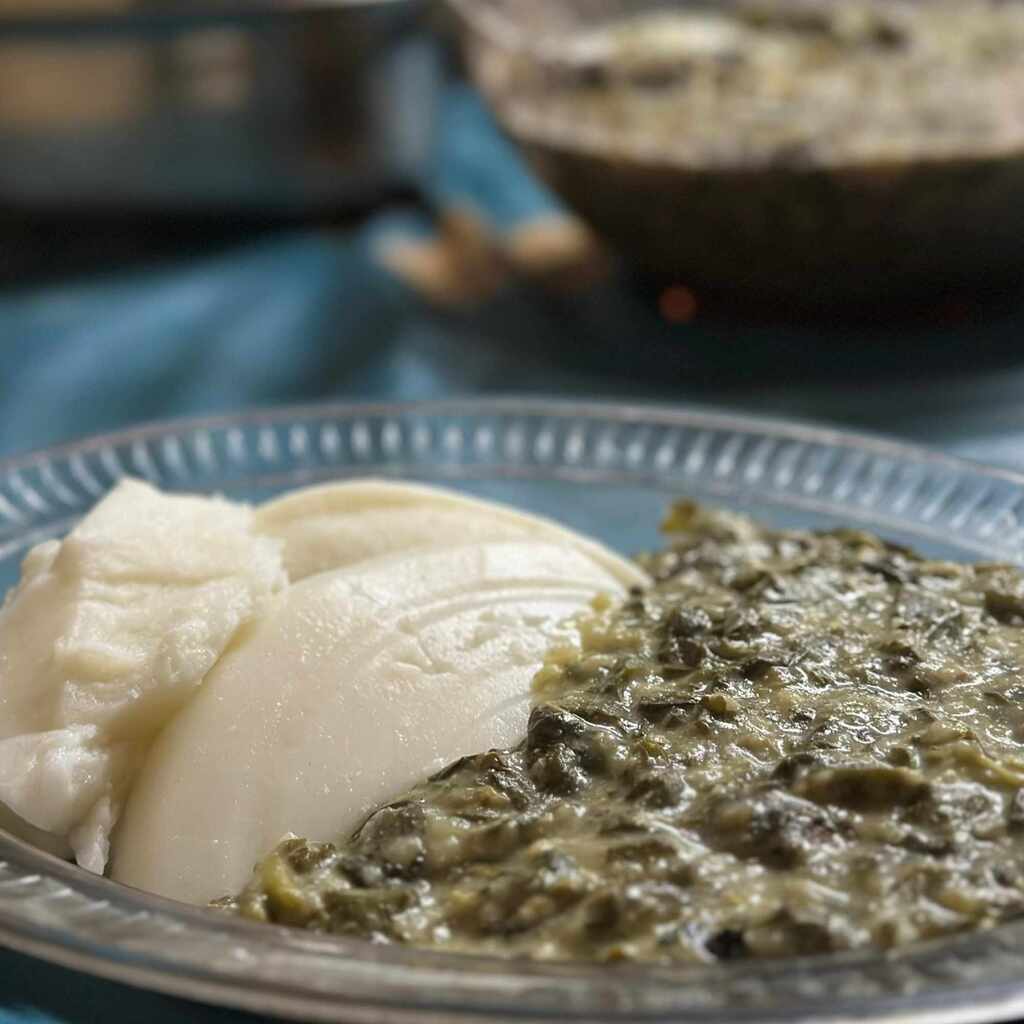
When the dish was ready, we served it in a large bowl. Its green colour was vivid and the ground peanuts had gently softened and enriched the whole dish. The smell was irresistible. We settled down to eat together. Every mouthful was a balance between the bitterness of the leaves, the acidity of the bito and the sweetness brought by the ground peanuts. It was simple, but deeply satisfying. “Mmm, it’s really good!” said my cousin. “You see, you don’t need everything to succeed,” replied my mother.
In Ouagadougou, babenda is part of everyday life. It is made at home, shared with neighbours and found all across the city. In many neighbourhoods, around a street corner or near a market, small stalls offer hot babenda at any hour: in the morning, at midday and even in the evening.
Cooking that day, I understood that every element matters. Even the simplest ones. Just like in a family. Babenda is our culture. It is our memory. It is a way of passing on gestures, values and love. Even in its simplest form, it remains a dish rich in meaning.
The memory of that morning remains etched in my mind: the soft light, the smells, the laughter, hands rummaging through the leaves… and my mother’s reassuring presence. Because, deep down, babenda isn’t just a dish. It’s a story that’s cooked up time and time again in Ouagadougou.
Find out more about the AfriFOODlinks progamme here.
Share this story with friends by clicking the links below: