Lusaniya reborn: from home tradition to urban experience
The steam from the freshly cooked matooke (green bananas) rose into the air, carrying with it a warm, earthy aroma that filled the compound. What time was it? Meal time! We gathered, barefoot, slightly restless, but careful not to touch the food yet. The “Lusaniya” sat at the center, generous and inviting. By Sam Wesamoyo, AfriFOODlinks Youth Ambassador, Uganda
Everyone quickly sat around the mouth watering meal, adjusted their sitting position, folding their legs properly to have each one comfortably accommodated. One whispered a reminder to wait. Then, in a quiet but steady voice, the one sibling began: “Let us pray…” Only after the final Amen, with every hand was in place could the meal begin. This was Lusaniya!
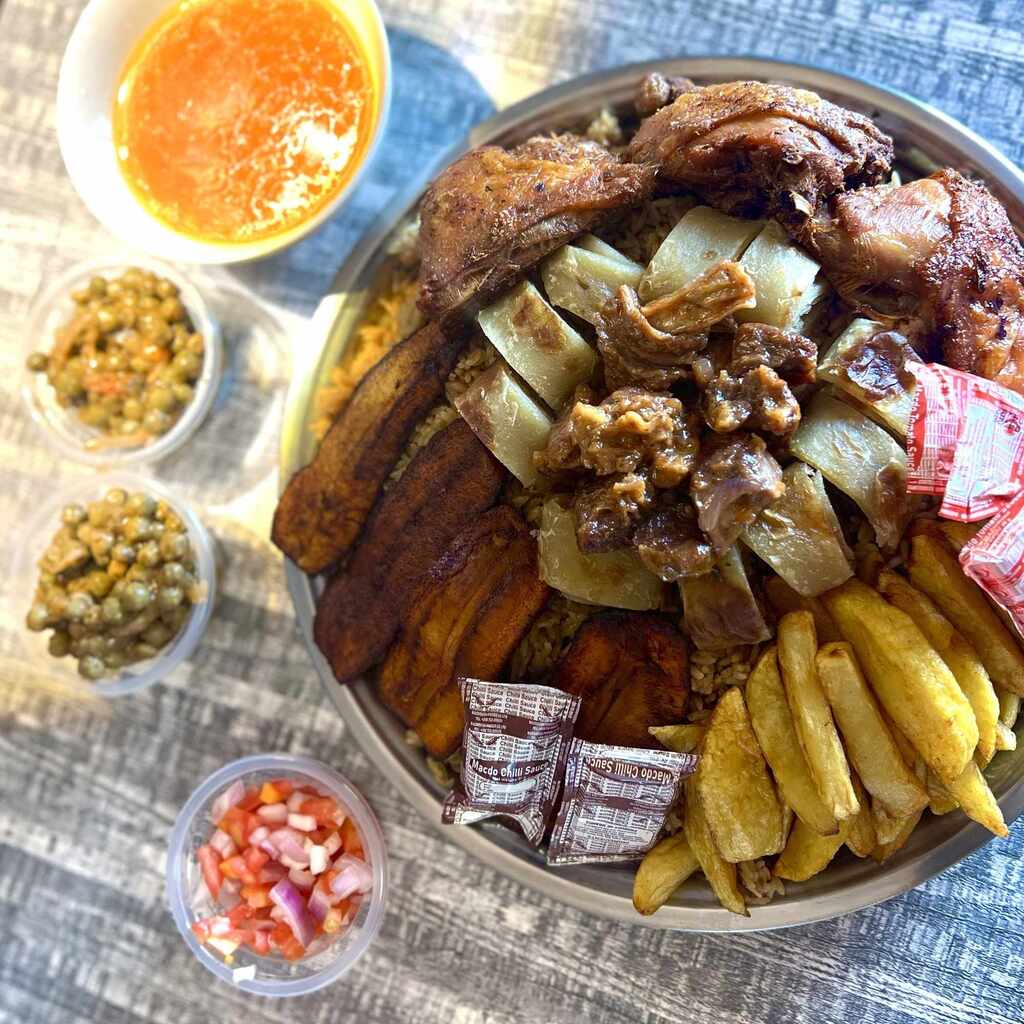
“Lusaniya” a word drawn from the local language, simply means “tray,” but its meaning stretches far beyond that. It is a way of life. It represents a shared space where food, values and relationships met.
Growing up, Lusaniya shaped how we ate and how we related to one another. Meals were never rushed or individualistic. Instead, they unfolded with intention. Sitting around the tray required order, legs folded, posture upright, eyes mindful of others. No one began before everyone was ready. That waiting, sometimes difficult for a child, quietly taught patience.
Prayer was not just ritual, it was participation. Each member took turns saying it, giving even the youngest among us a voice and a sense of belonging. In those small moments, confidence was built, faith nurtured and community strengthened.
There were unspoken rules too. You did not reach across into someone else’s portion. You did not eat greedily. You learned to take what was enough, leaving space for others. Discipline was not enforced harshly, it was lived, observed and internalised.
Meals were often shared in groups. Elders had their tray, while children gathered around another, laughing more freely but still bound by the same expectations. Visitors were always accommodated, either joining the elders or, in special cases, honored with their own tray. Lusaniya, in this way, extended beyond the household; it was a symbol of hospitality.
The food itself reflected a deep connection to the land. Matooke was central, sometimes served with beans or cassava, often combined into “Katogo” which translate to “mixed up”, a comforting mix that brought flavors and people together. On special occasions, the Lusaniya became richer, pilau, meat, or chicken would appear, often sourced from within the community. Most of what we ate came from our own gardens or nearby farms. Keeping chickens, goats, or cows was common and farm work was part of the key tasks, growing up. Food was not just consumed, it was cultivated.
Today, Lusaniya has found new life in urban spaces, but in a different form. In Mbale, the concept has been reimagined in restaurants and eateries that serve elaborate trays designed for sharing. Places around the city center and near local markets now offer Lusaniya experiences that bring people together over large platters of chips, fried chicken, goat meat, fish, rice and avocado, among others.
A few years ago, I remember sitting at one spot in Mbale, watching a group of friends lean in over a tray, laughing, negotiating pieces of meat, passing items across. For a moment, it felt familiar. The setting had changed, but the spirit lingered. Yet, the differences are clear.
Urban Lusaniya is largely built on purchased food, often including imported rice and processed ingredients. Unlike the rural setting, where meals were rooted in what we grew, urban dining reflects a shift toward convenience and consumption. Even the trays themselves have changed. Smaller portions can now be ordered for individuals, especially during times like Ramadan, where one might choose to eat alone.
More significantly, the culture around eating is evolving. The communal instinct is gradually giving way to individual plates and personal portions. Children are growing up in environments where sharing is not automatic, it must be taught deliberately. The quiet discipline of waiting, the subtle rules of respect and the collective rhythm of eating together are becoming less common.
In many ways, Lusaniya today exists between two worlds. It has adapted, expanded and even commercialised, but at its core, it still carries a powerful reminder: that food is not just about nourishment, but about connection. And perhaps, in a fast-changing world, that is something worth holding onto.
Find out more about the AfriFOODlinks project here.
Share this story with friends using the links below: