
Campaign against highly hazardous pesticides gains momentum in East Africa
By Rabecca Mwila, Staff Writer
For decades, millions of smallholder farmers in Africa have been using chemical inputs including fertilisers and pesticides to grow their crops. Unknown to them, many of the pesticides are banned in European countries due to their negative effects on human health and the environment.
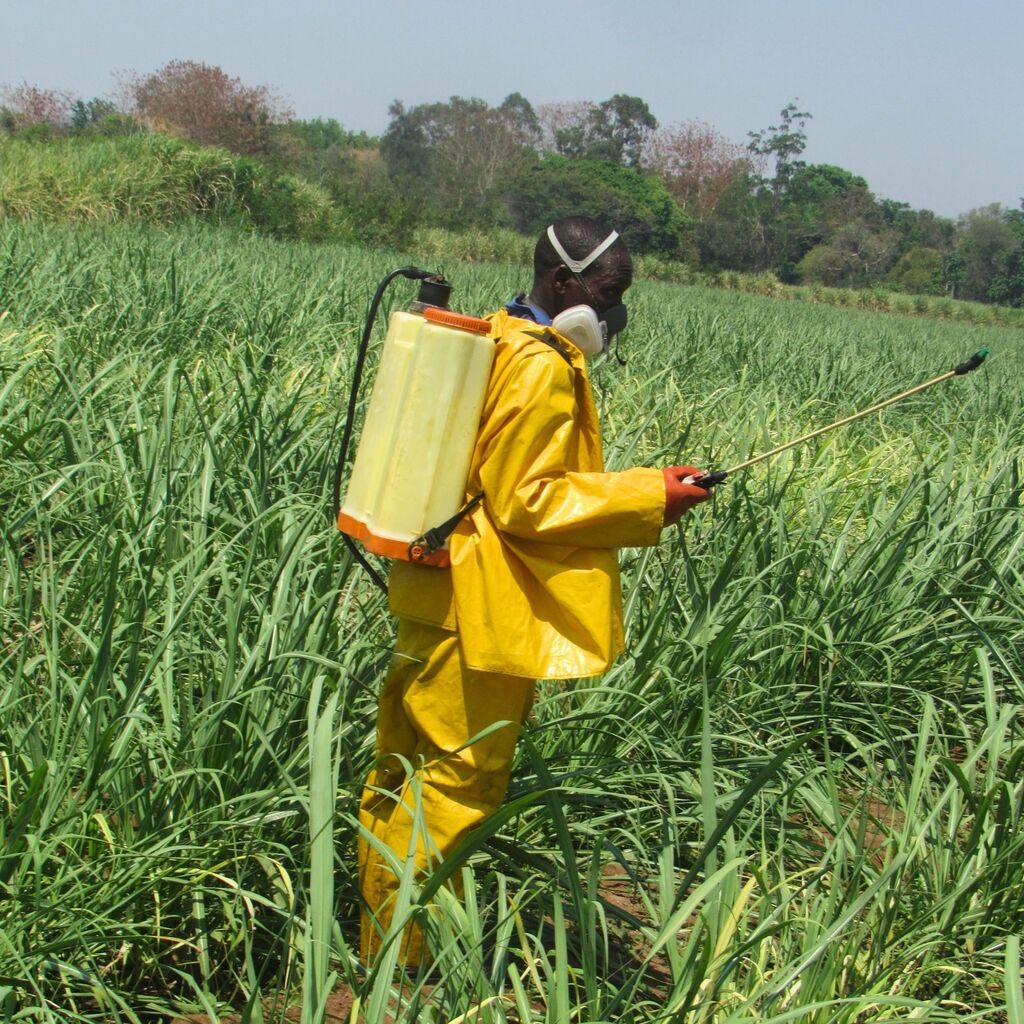
A coalition of civil society organisations advocating for non-use of Highly Hazardous Pesticides (HHPS) in East Africa is gaining momentum with calls for strict regulations to limit their use in the region and the continent at large.
Participatory Ecological Land Use Management (PELUM) Uganda Country Coordinator, Josephine Akia, said in an interview with Mizizi Magazine that the Coalition for Agroecology and Elimination of Highly Hazardous Pesticides, a 16 member coalition, has been established and is composed of both international and local civil society organisations.
“As a coalition, we are trying to see how we can bring together civil society organisations, farmer movements, environmental and consumer groups working at national, regional and global levels to support the total phase out of HHPs and lead the transition to safer and sustainable alternatives.” – Akia
HHPs are products internationally recognised as posing high risks to human health and the environment. Akia adds that in east Africa, the concern over the use of HHPs comes with the realities of smallholder farmers which include limited protective equipment, weak extension services, informal chemical markets which allow unrestricted access of HHPs, labels on the HHPs are in English or foreign languages while majority of smallholder farmers are illiterate or semi-literate and the potential contamination of the environment.
According to Akia, weak regulatory enforcement is allowing HHPs banned in European countries to still remain available in many African countries leading to more farmers using them.
“We have a list of HHPs that have been banned in Europe, but are sold in Africa. This goes to show what kind of double standards that we have, because what is not safe in Europe is equally not safe for East Africa and Africa and even a farmer, a farmer who produces food that Europeans eat.” – Akia
Akia explains that PELUM Uganda is supporting evidence generation to show that HHPs are dangerous, conducting agroecology training to provide farmers with alternatives to HHPs, supporting farmers in production of bio-rationals and bio-fertilisers and pesticides which are less toxic to human health and the environment.
“We do a lot of policy dialogue with policy makers, here in Uganda we working with the ministry of Agriculture animal industry and fisheries, so that we see how we can monitor the uncontrolled use of HHPs, but also to ensure we have proper legislation and policies that speak to the use of hazardous pesticides and promotion of establishment of regulations that promote alternatives.” – Akia
She has also emphasised the need for globally harmonised pesticide regulations, joint scientific assessment, coordinated monitoring and shared investment in agroecology.
Akia is hopeful that the growing public attention and demand for safe, healthy nutritious food and the policy attention to agroecology will support Africa’s transition to agroecology and other sustainable farming systems.
Grow the story by sharing below: