
Profile: Why Bakhusele Mathupha believes South Africa can grow a healthier future
By Stefanie Swanepoel, Editor-in-Chief
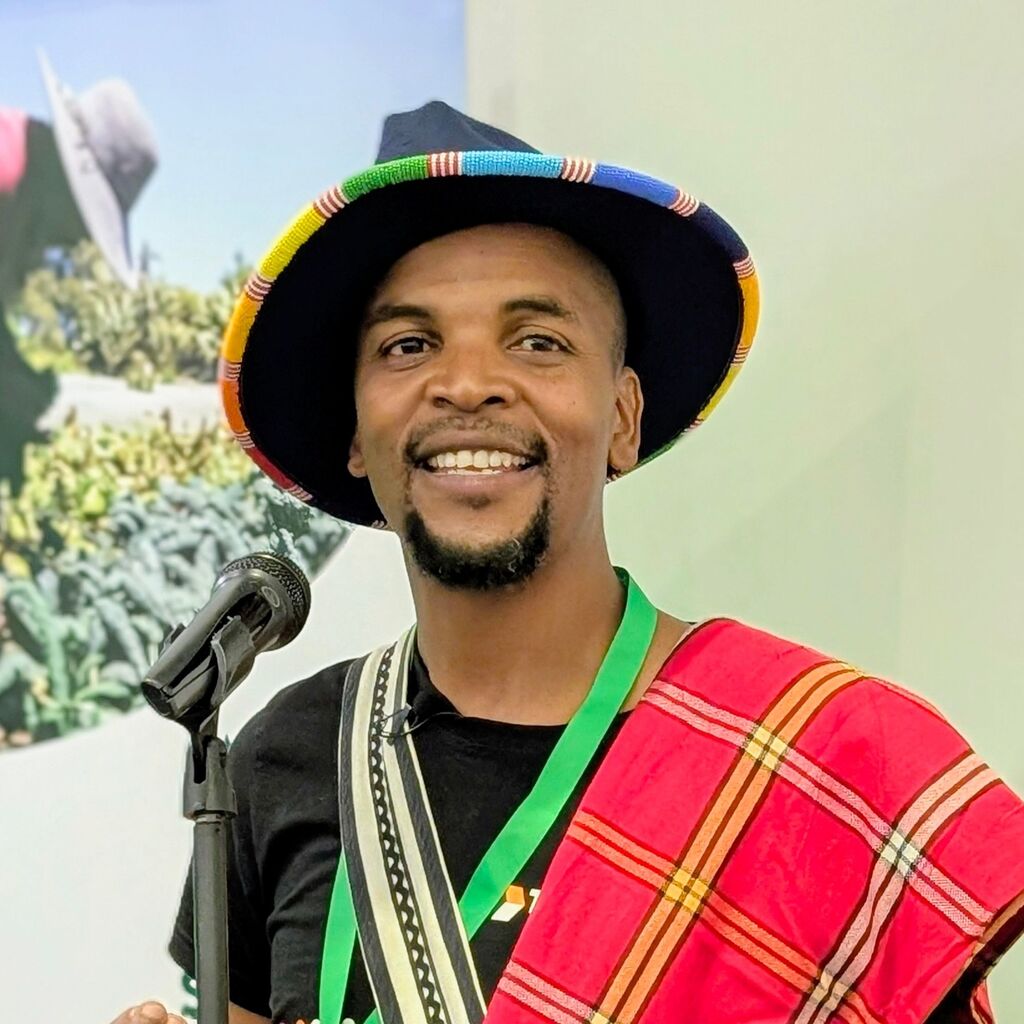
Before our conversation began, I asked Bakhusele Mathupha a simple question: How did you end up in farming? I expected to hear about crops, markets or agricultural training. Instead, he took me back to his childhood in the Transkei, to a time when every family grew its own food and neighbours shared what they harvested. By the time our interview ended, it was clear that this was not simply the story of a farmer or the newly elected Chairperson of the South African Organic Sector Organisation (SAOSO). It was the story of someone trying to restore a relationship between people, food and the land that has gradually been lost.
When Bakhusele Mathupha talks about food, he rarely begins with farming. Instead, he begins with memory. Growing up in the Transkei, food was simply part of everyday life. Families grew vegetables around their homes, kept livestock and exchanged food with neighbours. Most households relied very little on supermarkets because they produced much of what they needed themselves. “It wasn’t something we called food security,” he reflects. “It was simply how people lived.”
Those childhood memories continue to shape the way he thinks about agriculture today. They also explain why, as the newly elected Chairperson of the South African Organic Sector Organisation (SAOSO), he believes rebuilding healthy food systems begins long before crops reach markets.
Watching a food system disappear
Although his father worked for the Department of Agriculture, farming was never just a profession in the Mathupha household. School holidays were spent in the garden, tending crops and caring for livestock alongside the rest of the family. Over time, however, he watched those familiar landscapes begin to change.
Commercial seed, synthetic fertilisers and mechanised farming gradually replaced many of the local farming practices communities had relied on for generations. Growing food became more expensive. Families began buying food they had once produced themselves. Livestock disappeared from many homesteads and traditional knowledge slowly faded.
“I couldn’t understand why communities that had always fed themselves were now waiting for someone else to sell them the food they used to grow themselves.”
The moment everything changed
Mathupha did not immediately become a farmer. Instead, he pursued higher education and became a teacher. But it was in the classroom that his life’s direction changed.
Day after day he watched children arrive at school hungry. “You could see it on their faces,” he says. “They were undernourished, struggling to concentrate and falling behind. As someone trained in science, I knew what I was looking at. These children weren’t failing because they lacked ability. They were hungry.”
During the COVID-19 pandemic, that reality became even more stark as many learners came to school primarily for the daily meal provided through the school nutrition programme. He began asking a simple question. Why were schools buying food when communities could be growing it themselves?
His first attempt was to establish a school food garden. Although the idea was welcomed, he soon realised that enthusiasm alone was not enough to sustain it. “I realised I needed to think differently.”
Leaving teaching to grow hope
Mathupha returned home and asked his father whether he could use part of the family land.
He was given two hectares. After speaking with community leaders, he began developing what would become a community food garden and eventually a thriving food forest.
Food & Trees for Africa supported the initiative through an 18-month mentorship programme, introducing him and members of the community to permaculture. Together they transformed neglected land into productive growing spaces while building local skills and confidence. Today, several community members work alongside him and the project continues to expand. In 2024, he made one of the biggest decisions of his life: he left teaching to focus entirely on farming and community food systems. “I realised I could have a bigger impact outside the classroom. If children have enough healthy food to eat, they arrive at school ready to learn, he says.
Farming is about more than food
Ask Mathupha what farmers need and he does not begin with finance or technology. While recognising that access to markets, infrastructure and extension support remain important, he believes the greatest challenge is rebuilding knowledge, confidence and community.
“Farmers need coordination. They need training in seed saving, seed sovereignty and understanding how food systems work.” he says.
For him, agriculture is not simply about producing food. It is about restoring relationships between people, land, culture and community. That philosophy also shapes the way he understands agroecology and organic farming. “I see organic farming as a way of living. Agroecology provides the science that helps us understand and strengthen that relationship,” he says.
Rather than competing with industrial agriculture on its own terms, he believes communities should invest in rebuilding their own food systems based on local knowledge, local markets and local leadership: “If we strengthen these community food systems across South Africa, we can build something that truly serves our people.”
A new chapter for SAOSO
As Chairperson of SAOSO, Mathupha sees the organisation as far more than an industry association. He wants it to become the national home for South Africa’s organic movement.
That means bringing together smallholder farmers, commercial organic producers, researchers, NGOs, businesses and policymakers around a shared vision for healthier food systems. Most importantly, he wants farmers themselves to shape that vision. He believes smallholder farmers have carried South Africa’s food system for generations, even if their contribution has often gone unrecognised. “They deserve a national voice,” he says.
“I want every farmer to feel they belong. Not because they are joining someone else’s organisation, but because they have knowledge, leadership and experience to contribute.”
Growing the future together
Asked what message he would leave with farmers and consumers alike, Mathupha returns once again to the connection between people and the land. “We are what we eat. We are what we put into our soils. We are what we put into our rivers.” For him, every decision about food is also a decision about the future. “If we stop and ask ourselves what kind of world our children and grandchildren will inherit from the way we farm today, then we begin making different choices.”
5 things Bakhusele Mathupha believes about food systems
- Food is more than a commodity. Food is culture, health, dignity and community. Agriculture should restore life, not destroy it.
- Smallholders are the backbone of food systems. Their contribution is often unrecognised, yet they produce much of the country’s food and carry generations of knowledge.
- Communities should reclaim their food systems. Local seed, local knowledge, local markets and local leadership create stronger and more resilient communities.
- Organic farming is a way of life. Organic farming reflects a way of living in relationship with people, soil and nature.
- Real change starts from the ground up. Healthy systems will be built by farmers, communities and partnerships working together, not waiting for someone else to solve the problem.
Click here for more information about SAOSO.
Share to let this story grow: