
Pondoland: Imagining a future rooted in the land
By Stefanie Swanepoel, Mizizi Editor-in-Chief
On South Africa’s Wild Coast, a Green Action Week gathering celebrated traditional food systems, community enterprise and the possibilities for a different kind of rural development.
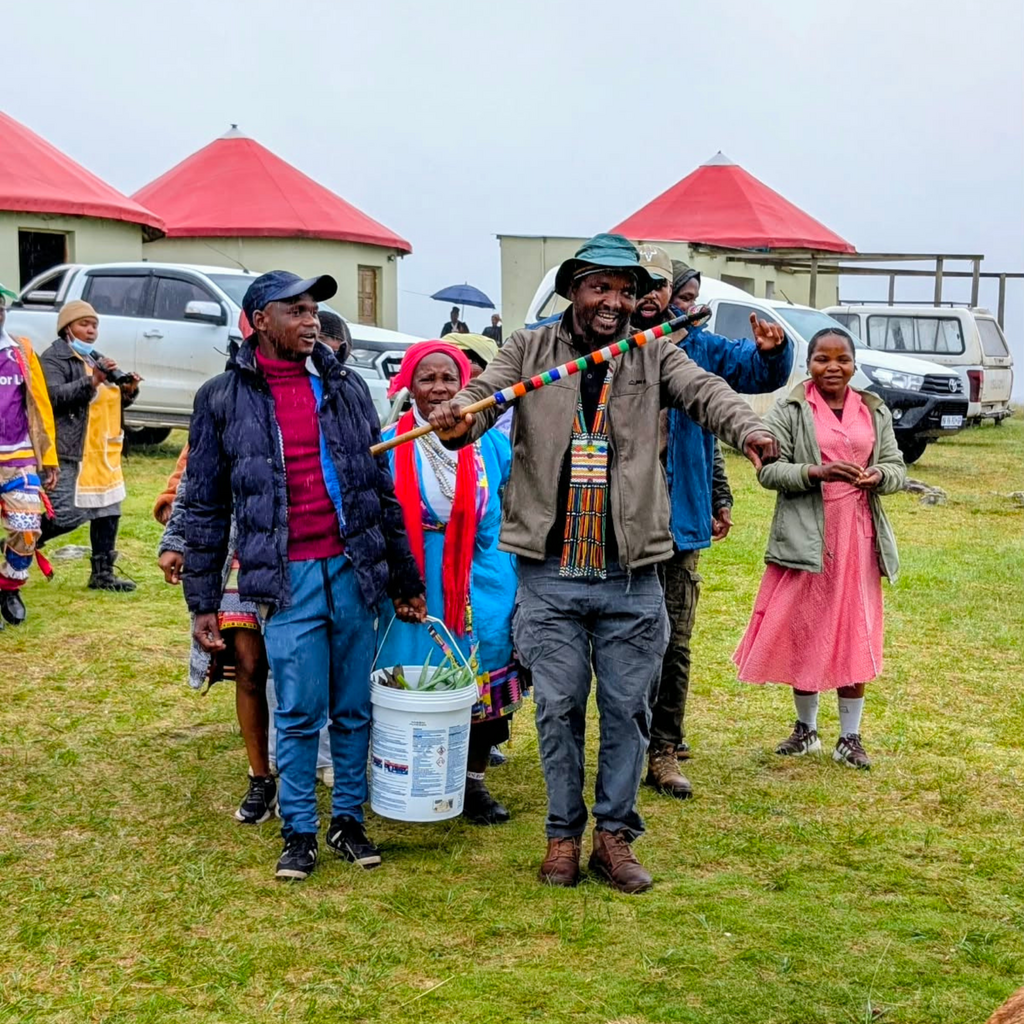
There is something about Pondoland that makes you want to stop, breathe deeply and take it all in. The skies are enormous, the views stretch for miles and the landscape rolls down from green hills and deep river valleys to the crashing waves of the Indian Ocean. Waterfalls tumble through the hills, cattle and chickens wander freely and traditional rondavels dot the landscape.
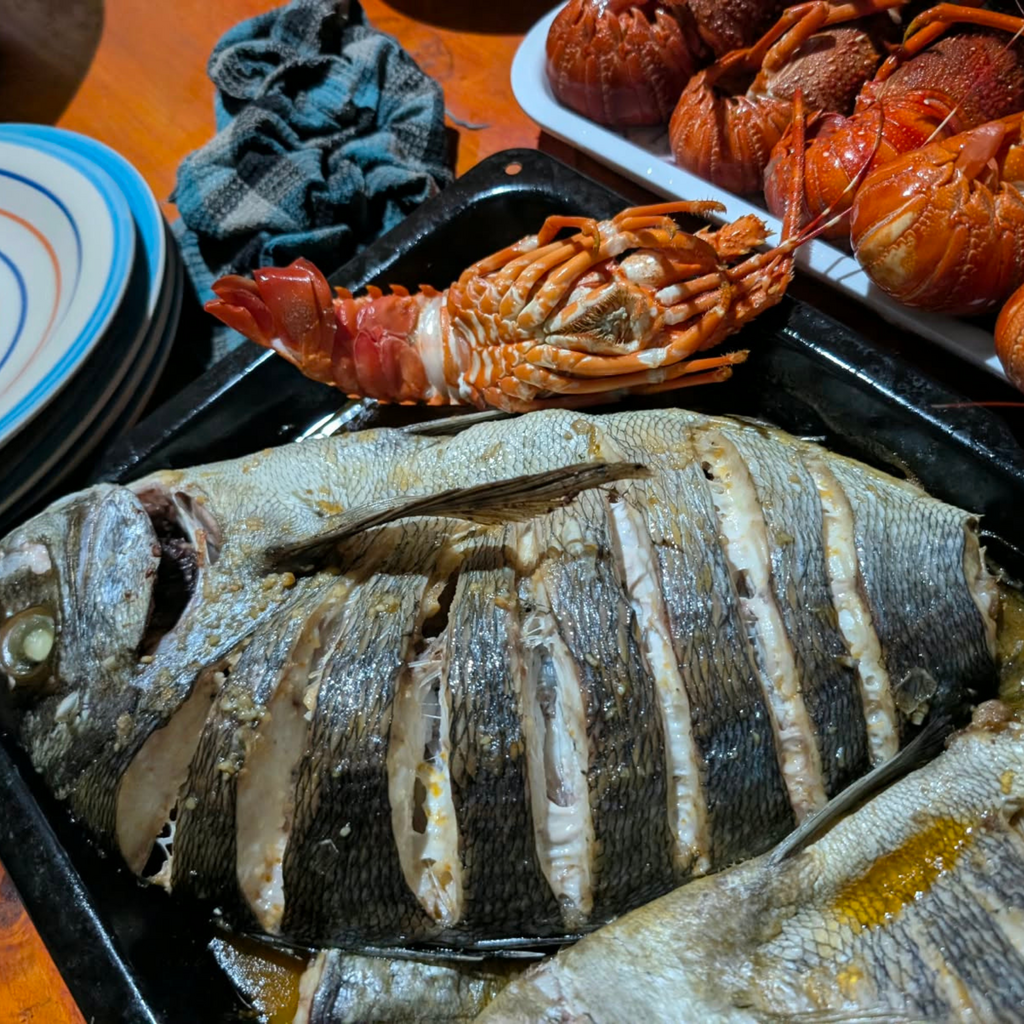
The land is rich in resources. There is fertile soil for growing food, reeds and grasses for building and an ocean that provides fish, mussels and crayfish. Generations of knowledge about living with this landscape remain embedded in the communities of the Amadiba people.
But this is not a story about an untouched rural paradise.
Poverty is a daily reality for many households, with social grants providing essential income. Young people leave in search of work and opportunities in urban areas, sometimes leaving older people without the labour needed to maintain their fields. While farming remains part of community life, chemical fertilisers and pesticides are increasingly finding their way into agricultural practices.
And the roads are difficult. Reaching some communities means travelling slowly along deeply rutted tracks, an obstacle to markets, services and economic development.
Yet spending time here raises a compelling question: What if rural development began not with what communities lack, but with the extraordinary resources, knowledge and possibilities they already have?
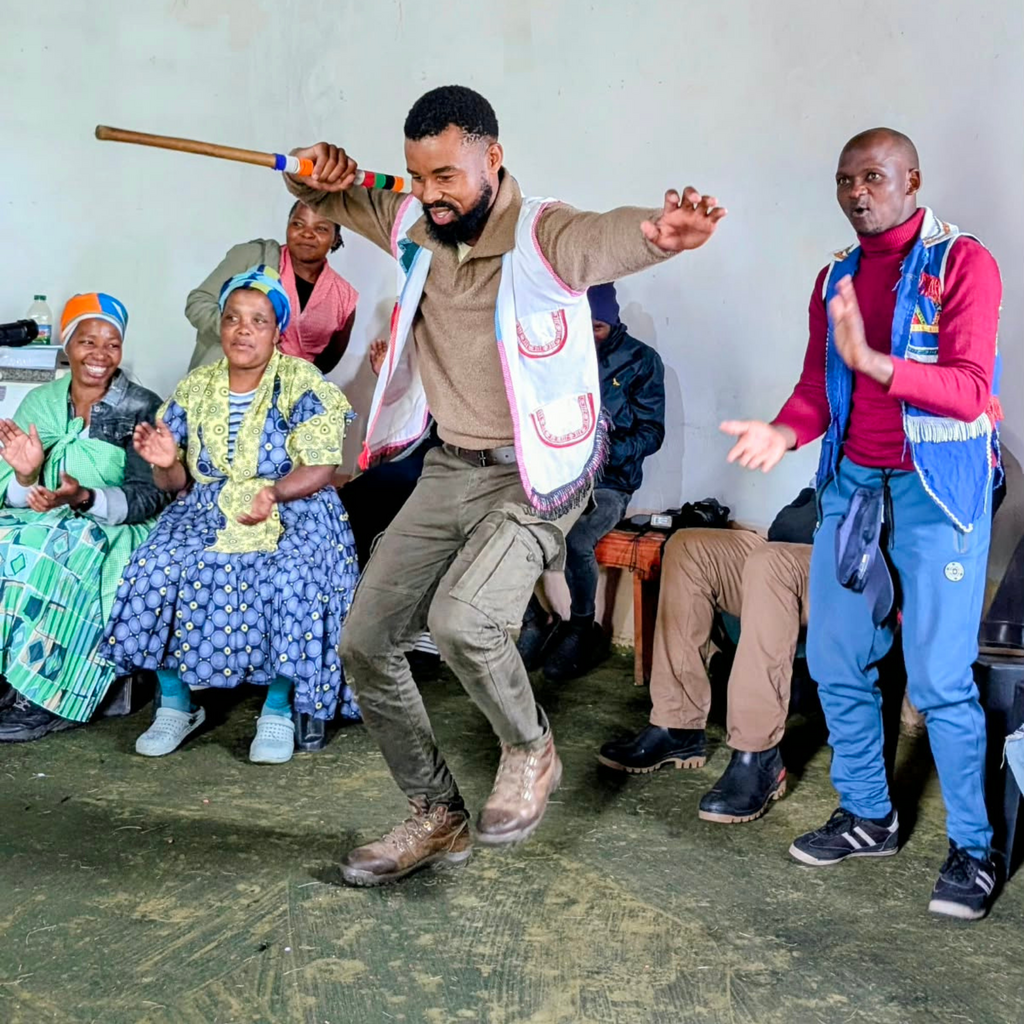
Celebrating food, knowledge and community
This question ran through a two-day Green Action Week gathering hosted by Sustaining the Wild Coast with the Amadiba community in October 2026.
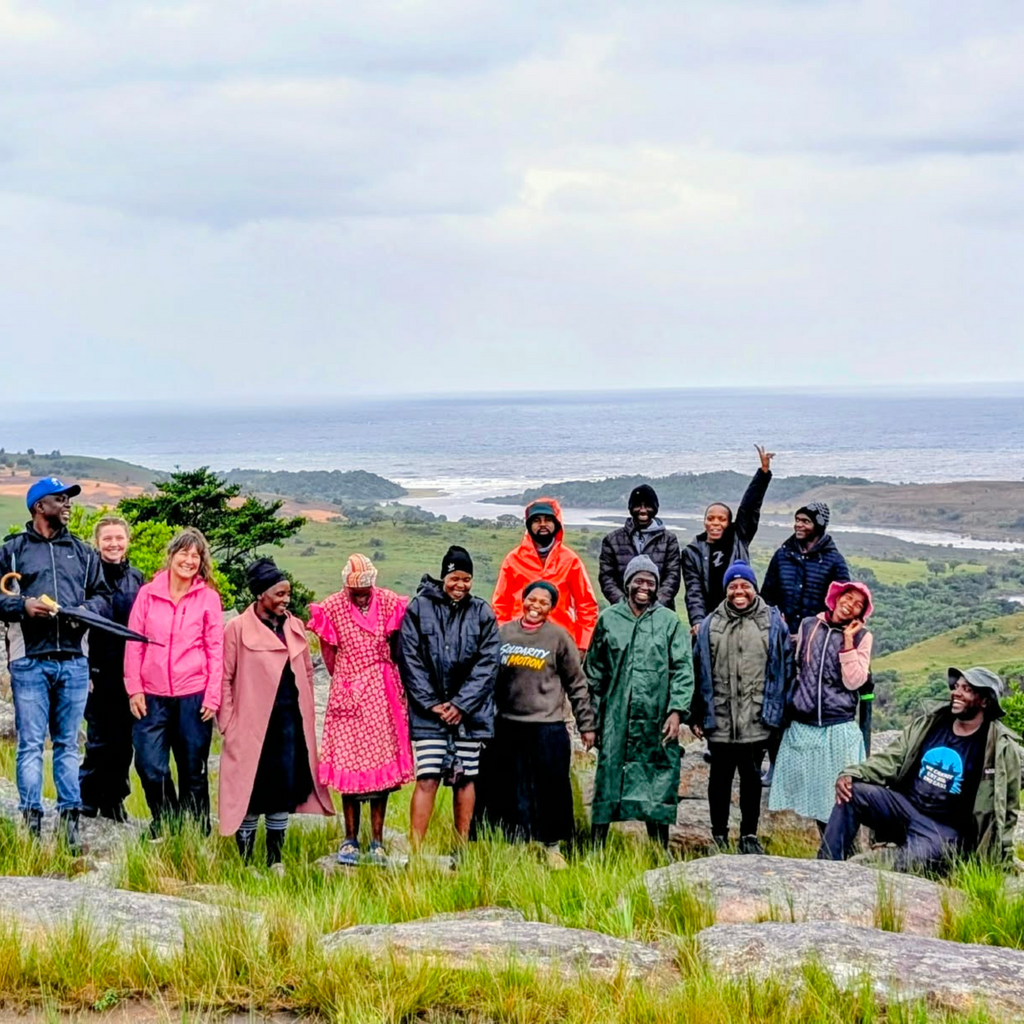
The event brought together community members, young people and visitors to celebrate traditional food systems, share knowledge and explore practical ways of strengthening local livelihoods.
The first day focused on food and farming. Community members shared their knowledge of indigenous agricultural practices, soil health and traditional foods. A documentary created by local young people captured traditional food preparation methods, demonstrating how storytelling can help preserve and pass knowledge between generations.
Food was also a celebration in itself. Preparing and sharing meals created space for conversations about the relationship between land, culture, health and community.
The second day turned towards the future, with visits to youth-led micro-enterprises and community initiatives.
A local nursery was producing affordable seedlings for surrounding households, while a small maize-milling enterprise offered a valuable service within the community. These might appear modest businesses, but they demonstrate something important: economic opportunities can grow from meeting local needs, keeping money circulating within communities and reducing dependence on distant services.
Participants also visited a community lodge nearing completion, offering a glimpse of how locally rooted tourism could create further opportunities.
What might a thriving rural economy look like?
It is easy to speak about sustainability in terms of what people should stop doing: using chemicals, degrading land or consuming too many resources. But sustainability also needs to offer a compelling vision of what people can do, particularly young people looking for a viable future.
Imagine a Pondoland where local nurseries supply thriving agroecological farms and household gardens. Where small mills and food-processing enterprises add value to local harvests. Where appropriate community technologies reduce the physical burden of farming, particularly for older people, and where young people can earn meaningful livelihoods without having to leave their communities.
Imagine locally owned tourism enterprises that bring income while respecting the landscape, culture and rights of the people who live there.
None of this would happen automatically. It would require investment, infrastructure, training, access to markets and, above all, development shaped and led by communities themselves.
It would also require recognising that traditional knowledge and appropriate modern technologies are not opposites. Together, they could help build food systems that are productive, ecologically sound and economically viable.
A future worth choosing
Pondoland’s relative isolation has helped maintain a landscape and way of life that have been profoundly altered in many other places. But isolation also brings hardship, and it would be wrong to expect communities to remain economically marginal simply to preserve a landscape that outsiders find beautiful.
Change will come. Better roads, new technologies, growing markets and the aspirations of younger generations will all shape the region’s future. The question is what kind of change, who will make the decisions and who will benefit.
The Green Action Week gathering offered no grand blueprint. Instead, it made visible the foundations on which a different future could be built: knowledge held by elders, the energy and ideas of young people, the practical value of small enterprises and the strength of people coming together around food and community.
Perhaps that is where genuinely sustainable development begins. Not with a model imported from somewhere else, but with communities having the means to build the futures they want, rooted in their own landscapes, knowledge and aspirations.
In Pondoland, the possibilities feel as expansive as the skies.
Stories grow when shared. Pass this one on: