
Healthy soils, healthy people: How communities in northern Malawi are rebuilding food and health from the ground up
By Stefanie Swanepoel, Editor-in-Chief
In the villages surrounding Ekwendeni in northern Malawi, conversations about food often begin not with crops, but with children.
Two decades ago, staff at the local hospital noticed a troubling pattern: children arriving with severe malnutrition were not simply lacking food. Their families were farming, often diligently, yet diets were narrow, soils exhausted and harvests unreliable. The problem, it became clear, was not only hunger but the condition of the land. Out of this recognition, Soils, Food and Healthy Communities (SFHC) began to take shape. What started as a small pilot linking health workers and farmers has grown into a long-term, community-rooted approach to food systems change, one that places soil health, farmer leadership, gender equality and nutrition at its centre.
When soil fails, households follow
Across much of Malawi, smallholder farmers depend on rain-fed agriculture on increasingly degraded land. Years of monocropping, deforestation and erosion have stripped soils of organic matter and nutrients. For farming households, this shows up as stunted crops, declining yields and limited crop diversity. For families, it means meals dominated by a single staple, usually maize, and little buffer against climate shocks or rising input costs. As SFHC’s Esther Lupafya explains, degraded soils undermine both food quantity and quality. When soils cannot nourish crops properly, households harvest less and struggle to diversify what they eat. This affects nutrition directly, particularly for young children, and reduces the ability of families to sell surplus produce to support their livelihoods.
At the heart of SFHC’s work is a simple but powerful idea: healthy soils behave like a living sponge.
Soils hold water during dry spells, release nutrients gradually to crops, and support the microorganisms that protect plants from pests and disease. Restoring soil health is not only an agricultural intervention but a climate, nutrition and health strategy. Through farmer trainings and demonstration plots, SFHC promotes practices that regenerate soil fertility using locally available materials. Farmers learn to produce bio-inputs such as ten-day fermented bokashi, mineral-enriched liquid fertilisers, native microbe solutions and activated biochar. These inputs rely on materials farmers can source themselves, from crop residues and animal manure to ash and local soils, reducing dependence on expensive synthetic fertilisers.
Farmers lead learning and knowledge generation at SFHC, they are not passive recipients of training
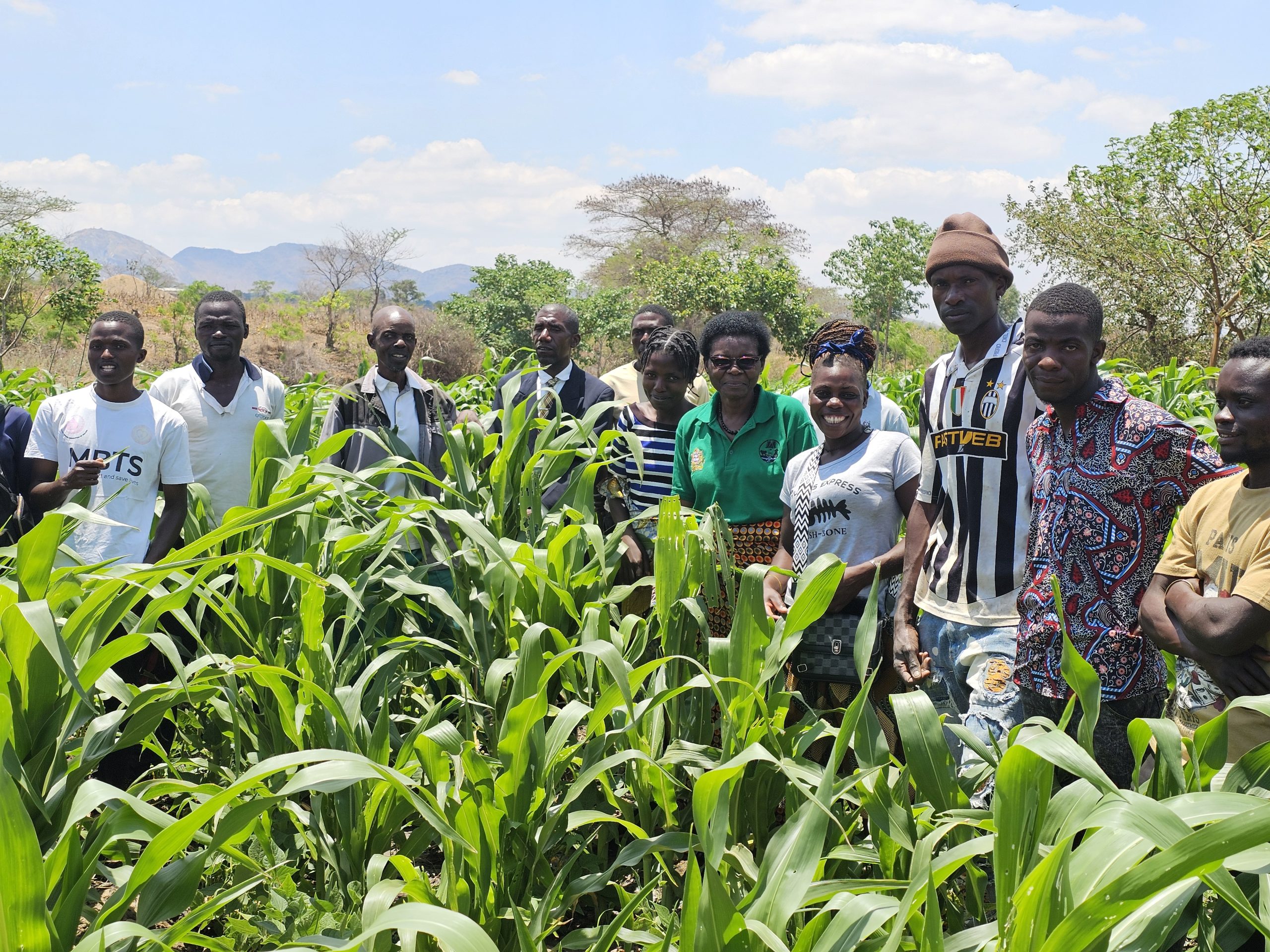
SFHC works through Farmer Research Teams (FRTs), volunteer farmers selected by their communities to experiment, host field days and share learning. Farmers are not passive recipients of training. They choose what to trial, assess results and teach others. Over time, this has strengthened confidence and local leadership. SFHC’s origins in the health sector continue to shape its perspective. Improving soil fertility is not seen as an end in itself, but as a pathway to healthier diets and more resilient households. As soils recover, farmers report improved crop growth and greater willingness to plant legumes, vegetables and indigenous crops alongside staples.
SFHC’s leadership model is rooted in relationships rather than projects – it is built for the long-term
Leadership is distributed across villages, shaped by trust built over time, and supported by partnerships with researchers, civil society organisations and government extension services. The organisation’s work also pays close attention to gender and inclusion. Training sessions actively invite women and young people, and leadership roles within FRTs are designed to be shared. For SFHC, inclusive decision-making is not an add-on, but central for change. In 2025, SFHC started working with youth more deeply, training them on production, financial literacy and proposal writing to enable them to meaningfully engage in farming economies.
![]() Soil regeneration on its own cannot make food systems secure if household decision-making remains unequal
Soil regeneration on its own cannot make food systems secure if household decision-making remains unequal
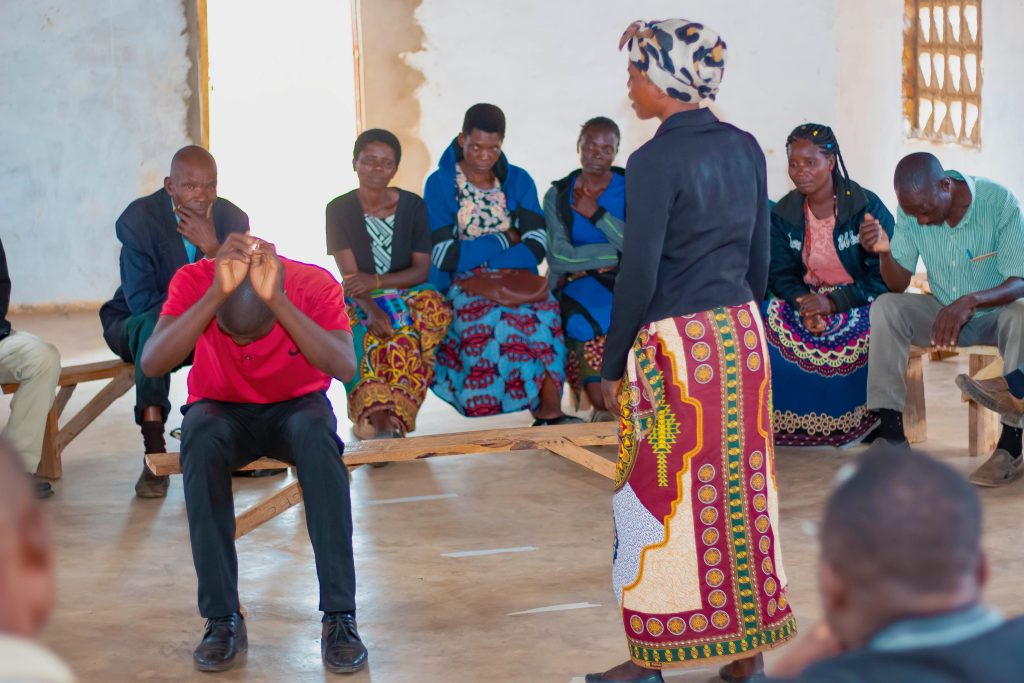
Participatory research in Malawi showed that, after controlling for land size, wealth and education, farmers who discussed farming decisions with their spouses were 2.4 times more likely to be food secure and to have diverse diets (Bezner Kerr et al., 2019). Gender equity improves resource access, leadership and nutrition. Through participatory theatre and shared learning spaces, SFHC addresses power dynamics in collaborative ways.
Follow SFHC’s story at www.soilandfood.org or contact them directly by email.
SFHC is also part of the partner-led Seed and Knowledge Initiative building a movement for agroecology, farmer-led seed systems and food sovereignty to realise Farmers’ Rights and achieve healthy and biodiverse food systems in southern Africa.
Captions and credits:
- Header image: SFHC’s Edundu and Bwanda Youth Clubs, Muzuzu, Malawi 2025. Credit: SFHC
- Middle image: SFHC participatory theatre training session with FRT members, Mzuzu, Malawi 2023. Credit: SFHC