Green urban harvest: Cultivating organic success in Mbale City, Uganda
By Sam Wesamoyo, AfriFOODLinks Ambassador
Juma’s moment of inspiration that took him into urban farming in Mbale City, Uganda
Like many young men on leaving school, Juma Wepukhulu set out in search of employment and was fortunate enough to secure a job as a manager at one of the guest houses in Mbale City. In his free time, Juma would read the daily papers left at reception for guests. One day, he came across an article about a woman in Kenya who had started gardening to feed her household, but over time, she began selling the surplus—first to neighbours, then to local restaurants and eventually to large hotels in the area. Her venture became so successful that she hired community members as outgrowers to meet the rising demand. “I was so inspired by her story,” Juma recalls. That moment marked the beginning of his own urban farming journey.
Taking the time to plan is a key element of farming success
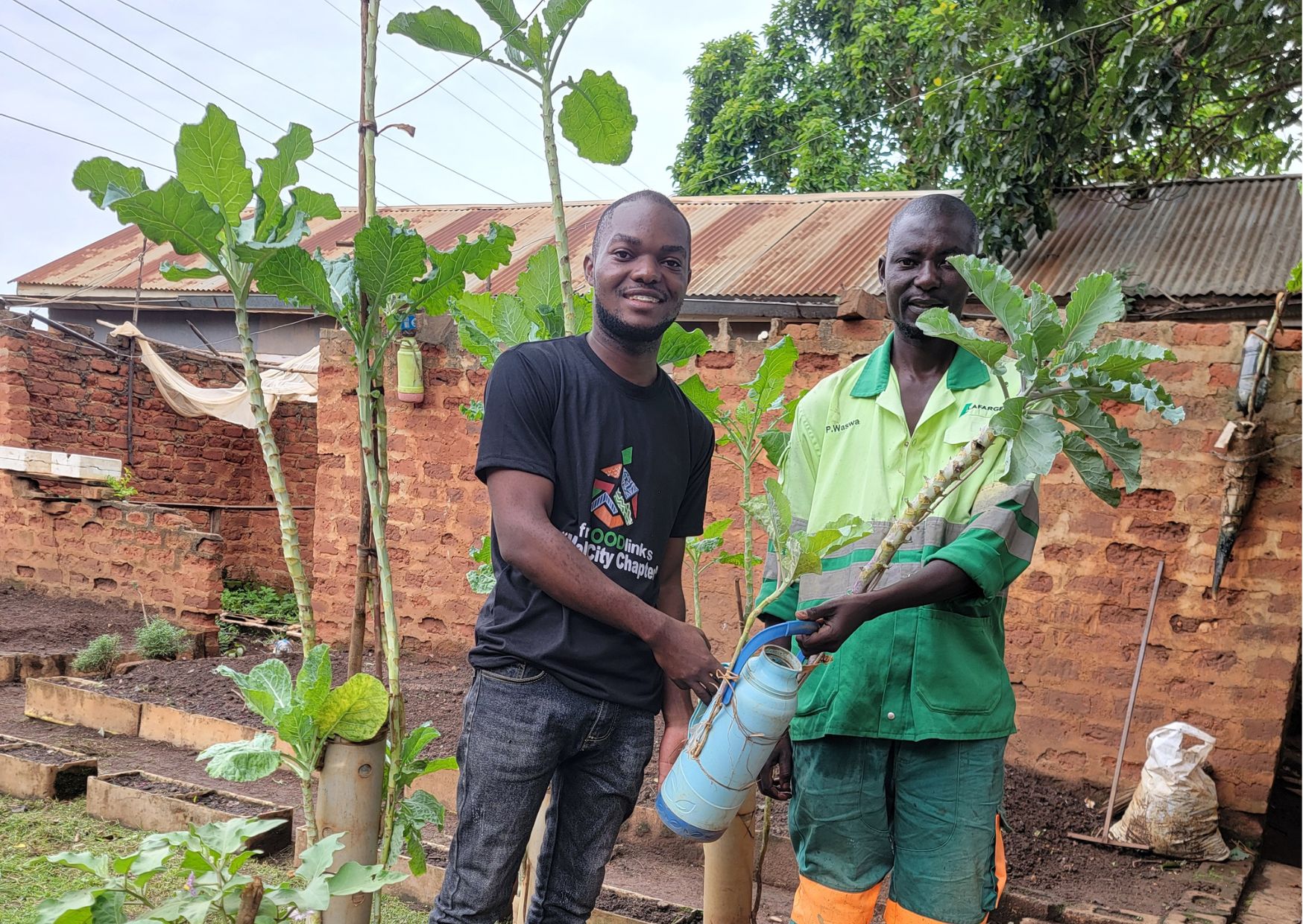
Juma took time to analyse the feasibility of the idea within his own context. After careful consideration, he came up with a plan that included starting an urban farm, using it as a demonstration and training site, while also selling vegetables to generate income. He began this venture right outside his rented residence. From the outset, the project showed great promise. The quick returns uplifted his hopes, and the creativity of his setup drew attention from the local community interested in forming an association to reduce local food insecurity. In 2014, Juma officially registered the association under the name Elgon Integrated Urban Farmers Association (EIUFA) with an initial membership of 30. In 2018, EIUFA was certified as one of the local organisations operating a practical demonstration site within the municipality.
EIUFA has challenged the perception that farming is only for those with large plots and deep pockets.
EIUFA provides training for communities and farmers, holds radio talk shows and makes innovative bio-pesticides (from rabbit urine and local plants), among other outreach activities. EIUFA is known for its innovative farming techniques, including tower and vertical gardening, sack and briefcase gardening, entrance growing, pipe planting, banana stem planting and polyethylene bag gardening. Juma’s impactful work has earned him widespread recognition in the community and through the media, and he is fondly known as ‘Uncle Farmer’. Through school garden initiatives, Juma trains students to set up gardens, rear maggots and write proposals, among other skills. Learners have organised themselves into ‘Uncle Farmers Clubs’.
From farmer to trainer to author
In early 2022, Juma was introduced by the municipality to visitors from the Resilient Urban Food Systems Project (RUFS), implemented by Makerere University’s Department of Geography, Geoinformatics and Climatic Sciences and funded by the Swedish International Development Agency. The team brought Juma on board as a trainer of municipal teams and as the focal person for the programme in Mbale City, a position he still holds to date. The project helped bring one of his long-held ideas to life: transforming his experiences and knowledge into a book. With both technical and financial support from the project, Juma published his first book in 2023, Climate Smart and Resilient Urban Farming: A Guide for Smallholder Farmers. Since the book’s release, Juma has landed contracts with schools and hotels.
What’s next for Juma and the EUIFA?
The long-term vision is to expand community training on vegetable production, establishing a network of 30-member groups that can act as outgrowers to meet demand, forming a cooperative to enable fulfilment of large supply contracts, and acquiring land to host a larger demonstration garden and enterprises, such as livestock production, aquaculture and apiculture. Income would be generated through product sales, agri-tourism and training.
Juma says: “This so-called dirty work is where the money is—we need to move beyond white-collar job fantasies.” “People think going to school is just to get a job, but it’s really to gain knowledge—and that knowledge should be used to create income,” he adds. Juma advocates for greater awareness among farmers on the proper use of pesticides and urges the government to invest in youth-led entrepreneurial ventures across the country.
Juma’s journey is inspiring, highlighting the power of organic urban farming as a transformative pathway toward healthier, more resilient and sustainable food systems. His work is a testament to how innovation and community-driven solutions can enrich lives and shape the future of our urban spaces.
The AfriFOODLinks project is revolutionising urban food systems from Africa to Europe, with a special focus on empowering young leaders through its Youth Ambassadors Programme. This is an edited excerpt from Sam’s article; read the full article here. For more youth stories from AfriFoodLinks, visit their website.